
What is Licensed Software? Software License Types and Examples
In today’s rapidly digitizing and competitive business world, the fundamental way to increase operational efficiency is by establishing the right technological infrastructure. From human resources processes to factory production lines, every step depends on software ecosystems. However, many businesses take massive risks by ignoring the legal and technical foundations of the digital tools they use.
Companies facing cybersecurity breaches, data losses, and heavy legal sanctions often share a common trait: the use of unlicensed or incorrectly licensed products. For corporate sustainability, securing your digital assets is an absolute must. At this point, the first question that comes to mind to protect your business from these risks is: what is licensed software?
In this comprehensive guide, we will delve deep into the concept of software licensing, which plays a critical role in the digital transformation processes of businesses. We will step-by-step convey the knowledge and professional solutions you need to build the architecture best suited to your needs.
What is Licensed Software?
In the software world, a “license” is a legal contract between the creator of a program (the developer or manufacturer) and the person or institution that wants to use it. So, in a technical and legal context, what is licensed software? In its simplest definition, it refers to software protected by copyright laws, whose usage limits, distribution conditions, and ownership rights are secured by a specific agreement (EULA – End User License Agreement).
When you purchase a licensed product, you do not actually buy the software’s source code or ownership. You merely rent or buy the “right to use” that software within the conditions set by the manufacturer. This contract clearly defines how many computers the software can be installed on, whether its codes can be modified, and how it can be used for commercial purposes.
For businesses, using licensed software is not just a legal obligation but the foundation of operational security. Original software comes with regular updates, security patches, and technical support. This guarantees business continuity for every scale of enterprise, from SMEs to large factories.
What Are the Software License Types for Businesses?
Every company’s business model and operational volume are different. Therefore, software manufacturers offer various licensing models to meet different needs. To establish the right infrastructure, having knowledge about software license types is the first step in optimizing your IT budget.
The primary software license types most frequently encountered in the business world are:
1. Proprietary / Closed Source Licenses
In this license model, the software’s source codes are hidden, and it is strictly forbidden for users to modify or copy them. It is generally preferred in large enterprise software. The user can only run the compiled program. It offers high security and a standardized experience for businesses.
2. Open Source Licenses
Open source licenses are models where the software’s source code is accessible, inspectable, and modifiable by anyone. However, “open source” does not always mean “free and without rules.” There are different sub-types like GPL, MIT, or Apache. It provides high flexibility for companies with in-house development teams.
3. Subscription-Based (SaaS) Licenses
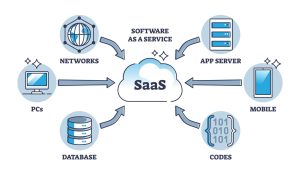
This is the most preferred model today by businesses seeking digital transformation. The software is provided as a service over the cloud (Software as a Service). Users access the system by making monthly or annual payments. It is ideal for SMEs and agile operation teams because it reduces server costs and provides access from anywhere.
4. User or Device-Based Licenses
This model determines how many different devices (Node-locked) or how many different users (User-based) can use the software. For example, for an HR software that will only be used by 10 people in a specific department, this model is highly cost-effective.
5. Concurrent Licensing
In this model, the software can be installed on any device within the company, but only a specific number of users are allowed to access it simultaneously. It is a budget-friendly approach for factories with shift workers or large call centers.
Industry-Specific Licensed Software Examples
Translating theoretical knowledge into practice increases the comprehensibility of the topic. The licensed software examples that increase efficiency and ensure security in business processes vary by industry and department. Here are some of the enterprise tools frequently used by businesses:
Production and Factory Management: Enterprise Resource Planning (ERP) systems used to manage complex production lines, inventory, and the supply chain. (e.g., Custom-developed production tracking automations, closed-source ERP suites).
Human Resources and Operations: HR Information Systems (HRIS) that manage personnel performance, leave, and payroll processes. They usually run on the cloud with multi-user subscription licenses.
Sales and Marketing (SMEs): Customer Relationship Management (CRM) platforms. This software is generally licensed under the SaaS model and ensures customer data is stored securely in compliance with KVKK/GDPR.
Design and Engineering: High hardware-demanding CAD/CAM drawing software used by R&D departments, typically sold with device-based or concurrent licensing models.
These licensed software examples are the clearest indicators of how companies automate their manual processes and turn them into measurable data.
Advantages of Using Licensed Software in the Corporate World
While license costs might seem like an expense item when planning a budget, the damage caused by using unlicensed software in the long run is far more costly. The main advantages that using licensed products will provide to your business are:
Cybersecurity and Data Protection: Original software receives continuous security updates. Your strongest line of defense against malicious software (ransomware, trojans) is an up-to-date and licensed infrastructure.
Legal Compliance and Reputation: Using pirated software leads to heavy fines and loss of commercial reputation. Licensed products keep you safe during legal audits.
Uninterrupted Technical Support: In an operational crisis, having a point of contact is vital. Only licensed users can benefit from the SLA (Service Level Agreement) support provided by the manufacturer.
High Performance: Because the codes of pirated software are usually broken (cracked) and modified, they cause system freezes and data losses. Original software runs at full capacity and stability.
Why is a Professional Custom Software Solution Necessary?
Managing the complex processes of software licensing, choosing the right products, and integrating them into existing systems is a challenging task. Many businesses waste their budgets by purchasing more expensive license packages than they need (over-licensing) or face legal risks by licensing inadequately (under-licensing).
Furthermore, off-the-shelf packaged programs may not fully adapt to the specific processes of every business. The expectations of your factory’s production line and your accounting department are different. Right at this point, you need a professional ecosystem partner who will ensure that software is not just “used” but “integrated” into your workflow. A partner who analyzes your system, closes security gaps, and builds an infrastructure fully compliant with global standards is the key to your competitive advantage.
Licensed Product Solutions and Ecosystem Management with Penta Unity
Licensed software solutions are the strategic lifeblood of a secure and professional business environment. In today’s digital world, the right tools are only as effective as their authenticity and the support provided. As Penta Unity, we specialize in providing tailored, comprehensive, and licensed product ecosystems to streamline your operations and safeguard your digital assets.
From industry-leading productivity suites to specialized enterprise tools, we recognize that navigating the complexities of software licensing can be a daunting task. Our expert team works closely with our clients to ensure they don’t just ‘use’ the software, but harness it to its highest potential while remaining fully compliant with global standards.
How Does Our Penta Unity Service Process Work?
Our transparent and results-oriented service process flawlessly designs your business’s digital transformation:
We Listen to Your Needs: Before taking a step, we analyze your business processes and listen to exactly what you need and your current bottlenecks.
Tailor-Made Solutions: We don’t believe in one-size-fits-all solutions. From WordPress migrations to custom in-house software, our team designs bespoke digital architectures specifically crafted to solve your unique business challenges and align with your operational goals.
Tactical Alignment: Every line of code and licensing strategy we implement is synchronized with your long-term business roadmap. We ensure our technical implementations serve your high-level strategic objectives.
Measurable Results: We translate “digital potential” into concrete data. By setting clear KPIs and performance metrics, we provide transparent reports proving the impact of our interventions on your bottom line.
Our Service Outputs: 6 Pillars of Excellence
As a digital system partner guiding businesses on their innovation journeys, our services are built upon six foundational pillars of excellence:
Scalability and Flexibility: We build flexible licensing and software infrastructures that instantly adapt to your growing business volume.
Security and Compliance: We ensure your data is fully compliant with legal regulations like KVKK/GDPR and international cybersecurity standards.
Performance Optimization: We fine-tune the installed licensed systems to work most efficiently with your hardware, with zero downtime.
User Experience: We produce intuitive and user-friendly interface solutions so your teams can easily adopt new software.
Data Integrity: We guarantee that the information flow between all your departments is collected in a lossless, encrypted, and consistent database.
Education and Awareness: We don’t just install the software and leave; we provide the necessary technical orientations so your teams can use these tools most effectively.
Frequently Asked Questions (F.A.Q.)
1. What are the legal risks for my company if I use unlicensed or “cracked” software? Using unlicensed software is a crime of copyright infringement. If detected, legal action can be taken against company executives, massive compensation fines can be issued, and operations can completely halt due to the confiscation of workplace computers.
2. Is open-source software always completely free? No. Being open-source means the source code is accessible. While most basic versions are free, manufacturers may demand commercial license fees when you request enterprise-level security, technical support, or custom modules.
3. How do I choose the right software license type (SaaS, On-Premise) for my business? This choice depends on your company’s data security policies, IT infrastructure, and budget planning. If you want to avoid server costs and desire flexibility, SaaS (Subscription) is ideal; if you want data to remain entirely physical within the company, On-Premise perpetual licenses should be preferred. Getting professional digital consulting simplifies this process.
4. What is a Software Audit and how do I prepare for it? These are audits where software manufacturers (or authorized institutions) check whether you are using the software in accordance with the contract terms. To be prepared, it is essential to keep an inventory of all devices in the company, use centralized license management software, and implement IT policies that prevent employees from downloading pirated software.
Would you like to meet our licensed product ecosystems, specially designed for your business goals to secure your operations? Reach out to us so we can analyze your needs and create a roadmap exclusively for you.